
How to Prevent Leggings From Pilling for Longer
Posted by
A favorite pair can feel flawless after a demanding training session, then look worn after a few careless laundry cycles. To prevent leggings from pilling, treat fabric care as part of performance. The same softness, stretch, and close-to-body comfort that make premium activewear feel exceptional also deserve a more considered routine.
Pilling is not always a sign of poor quality. It is often the visible result of friction: fibers loosen, catch, and gather into small balls on the surface. High-contact areas such as the inner thighs, seat, waistband, and places where a gym bag or rough outer layer rubs are naturally more vulnerable. The goal is not to make fabric indestructible. It is to reduce unnecessary friction so your activewear keeps its refined finish for longer.
Why Leggings Pill in the First Place
Most performance fabrics combine synthetic fibers with stretch fibers to create support, recovery, and a smooth hand feel. That construction is designed to move with you, but it can still develop pills when loose surface fibers are repeatedly pulled and tangled.
Laundry is often the main cause. Washing activewear with towels, denim, hoodies, or garments with zippers creates abrasion that fabric cannot avoid. Heat adds another problem. A hot wash or dryer can weaken elastic fibers over time, affect recovery, and make the surface more likely to look fuzzy.
Daily wear matters too. Long walks, studio sessions, cycling, and strength training all create friction in different areas. So can sitting on rough benches, carrying a textured bag against your hip, or layering under abrasive fabrics. A small amount of wear is normal. Rapid pilling, however, usually points to washing, drying, or contact habits that can be improved.
Prevent Leggings From Pilling Before Laundry Starts
The highest-impact step takes seconds: turn your pair inside out before washing. The outside surface is what you see and what rubs against the washing machine drum, other clothing, and fasteners. Protecting it on the inside reduces direct abrasion while still allowing the garment to get clean.
Close zippers, hooks, and Velcro on every item in the load. Better still, avoid washing activewear with anything that has aggressive hardware. A zippered training jacket may seem harmless, but one exposed zipper edge can repeatedly catch against a smooth knit.
Sort by fabric type rather than only by color. Wash performance pieces with other lightweight, smooth activewear. Keep them away from towels, fleece, cotton sweatshirts, denim, and heavily textured knitwear. These materials shed lint and create friction, which is exactly what encourages surface pills.
If you wash small loads or share laundry space, a fine-mesh wash bag offers another layer of protection. It is particularly useful for delicate, high-stretch pieces. Do not overfill the bag or the machine, though. Clothing needs enough room to move through water and rinse properly without being compressed into a rubbing mass.
Choose a Wash Cycle That Protects Performance Fabric
Cold water is the strongest default for activewear. It is gentler on stretch fibers, helps preserve shape, and is less likely to set odors or stress a refined fabric finish. Choose a delicate or gentle cycle with a lower spin speed when your machine allows it.
Use a small amount of mild liquid detergent. Too much detergent can leave residue that makes fabric feel less soft and may require additional rinsing. Powder detergents can work, but they are more likely to leave particles behind in a short or cold cycle if they do not dissolve fully.
Fabric softener is not the answer to a soft feel. It can coat performance fibers and interfere with moisture management, stretch, and breathability. The result may feel pleasant at first but gradually less effective in motion. Your activewear is engineered to perform without a coating on top of it.
Avoid bleach as well. Even when a garment looks durable, harsh whitening agents can damage fibers and compromise color. If a pair needs an extra refresh after a high-sweat session, focus on a thorough cold rinse and proper drying rather than stronger chemicals.
Wash after wear, but do not over-wash
Sweaty training pieces should not sit damp in a closed bag. Turn them inside out, let them air briefly, and wash them soon after use. This protects freshness and prevents odor from settling into fibers.
At the same time, a pair worn briefly for a low-intensity errand or relaxed day does not always need a full wash immediately. Less washing means less friction. Let the actual wear decide, while maintaining a hygiene routine that suits your activity level.
Skip the Dryer When You Can
Heat is tough on high-stretch fabric. A tumble dryer combines heat, tumbling, and contact with other garments – three conditions that can accelerate pilling and reduce long-term elasticity.
Air-dry your activewear whenever possible. Lay it flat on a clean drying rack or hang it where the waistband is supported and the garment can keep its shape. Keep it out of direct, intense sunlight for long periods, which can fade darker colors and place extra stress on fibers.
If a dryer is your only practical option, use the lowest heat setting and remove the pair while it is still slightly damp. Finish drying in the air. This is not quite as protective as skipping the dryer, but it is a better compromise than a high-heat cycle.
Reduce Friction During Wear and Storage
Care does not end in the laundry room. Consider what touches your activewear during the day. Rough wooden benches, unfinished workout equipment, textured bags, and abrasive layers can all create localized pilling. You do not need to avoid movement or train cautiously. Simply notice repeated contact points and make small adjustments when possible.
For example, use a clean mat during floor work, avoid sitting directly on rough surfaces after training, and be thoughtful about pairing delicate performance fabric with coarse outer layers. Fit matters here too. A pair that is excessively tight can create more tension and friction at high-contact points, while a pair that slips and bunches can rub as you move. Support should feel secure, not restrictive.
Store clean, completely dry pairs folded rather than tightly packed. Do not cram them beneath heavy items or leave them twisted in a gym bag. A smooth fold preserves the fabric surface and makes it easier to see what you have, so you can rotate your activewear instead of reaching for the same pair every session.
What to Do if Pilling Has Already Started
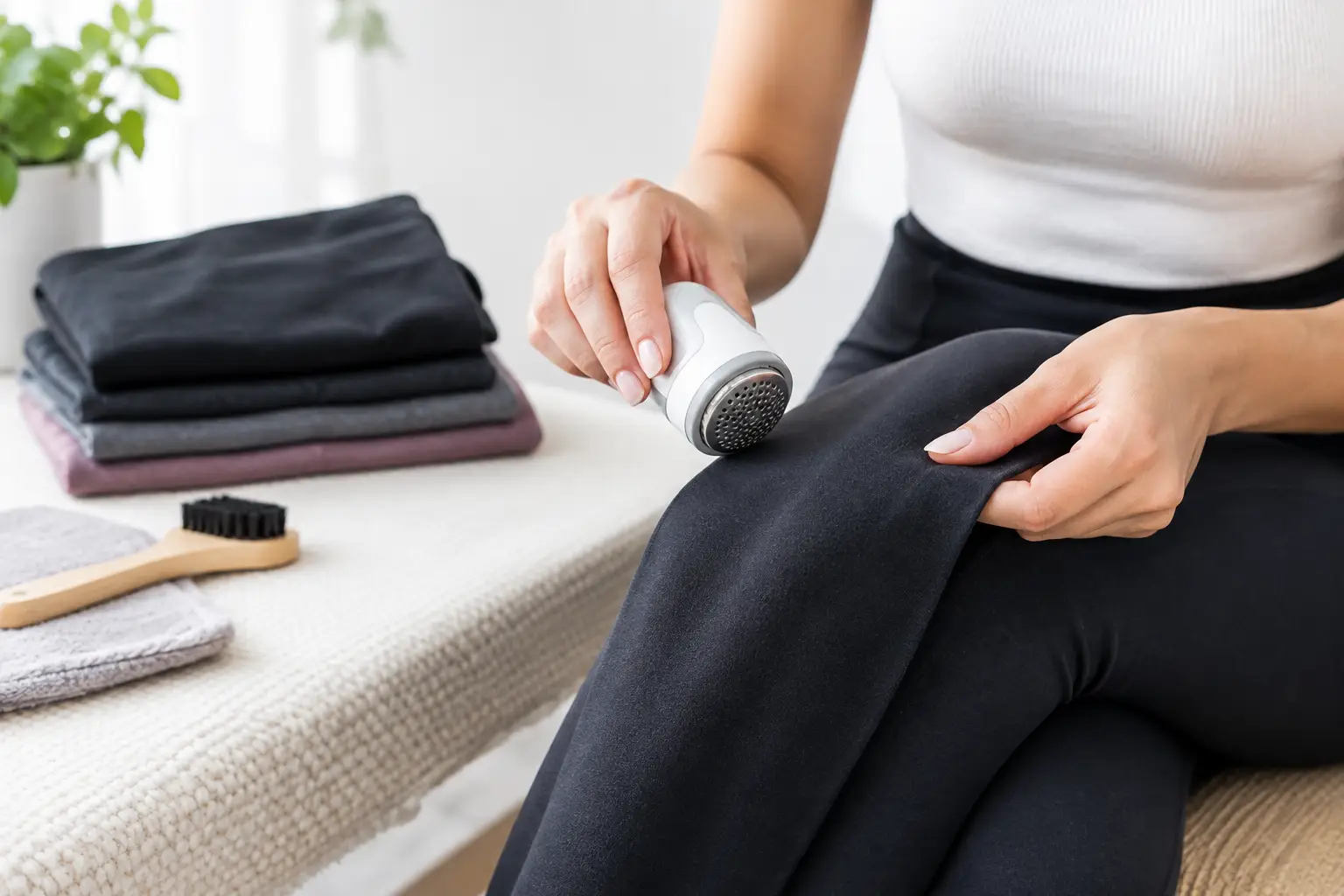
A few pills do not mean it is time to replace a pair. A fabric shaver can remove them cleanly when used with a light touch on a flat surface. Test an inconspicuous area first and avoid pressing hard, especially over seams or thin zones. A sweater comb may also work, but it requires more care and can pull delicate fabric if used aggressively.
Never pick pills off with your fingers. Pulling can draw out longer fibers and create a larger snag. Likewise, do not use a razor blade meant for shaving skin. It is difficult to control and can cut the fabric instead of only removing the loose fibers.
After removing pills, return to the habits that prevent them: inside out, cold wash, gentle cycle, smooth laundry companions, and air-drying. Maintenance is most effective when it is consistent rather than occasional.
Start With Fabric Built for Real Movement
No fabric is completely immune to friction, particularly when it is designed to stretch, support, and move through repeated training. But construction makes a real difference. Look for performance pieces with a smooth, dense knit, dependable recovery, and a fit that stays in place without digging in. Premium engineered comfort is not only about the first wear. It is about how the garment continues to feel after many of them.
SHe.X designs activewear around that standard: softness that supports movement, refined construction, and durability that earns its place in a repeat-wear rotation. Pair thoughtful fabric with thoughtful care, and your favorite leggings can keep looking as strong as they make you feel.

Recent articles
-
How to Prevent Leggings From Pilling for Longer
Learn how to prevent leggings from pilling with smarter washing, drying, storage, and fabric choices that protect softness, fit, and performance daily.
-

Performance Top Review: What Actually Matters
A performance top review for active women: see how fabric, fit, support, and durability shape comfort through workouts, walks, and everyday wear with ease.

Leave a Reply