
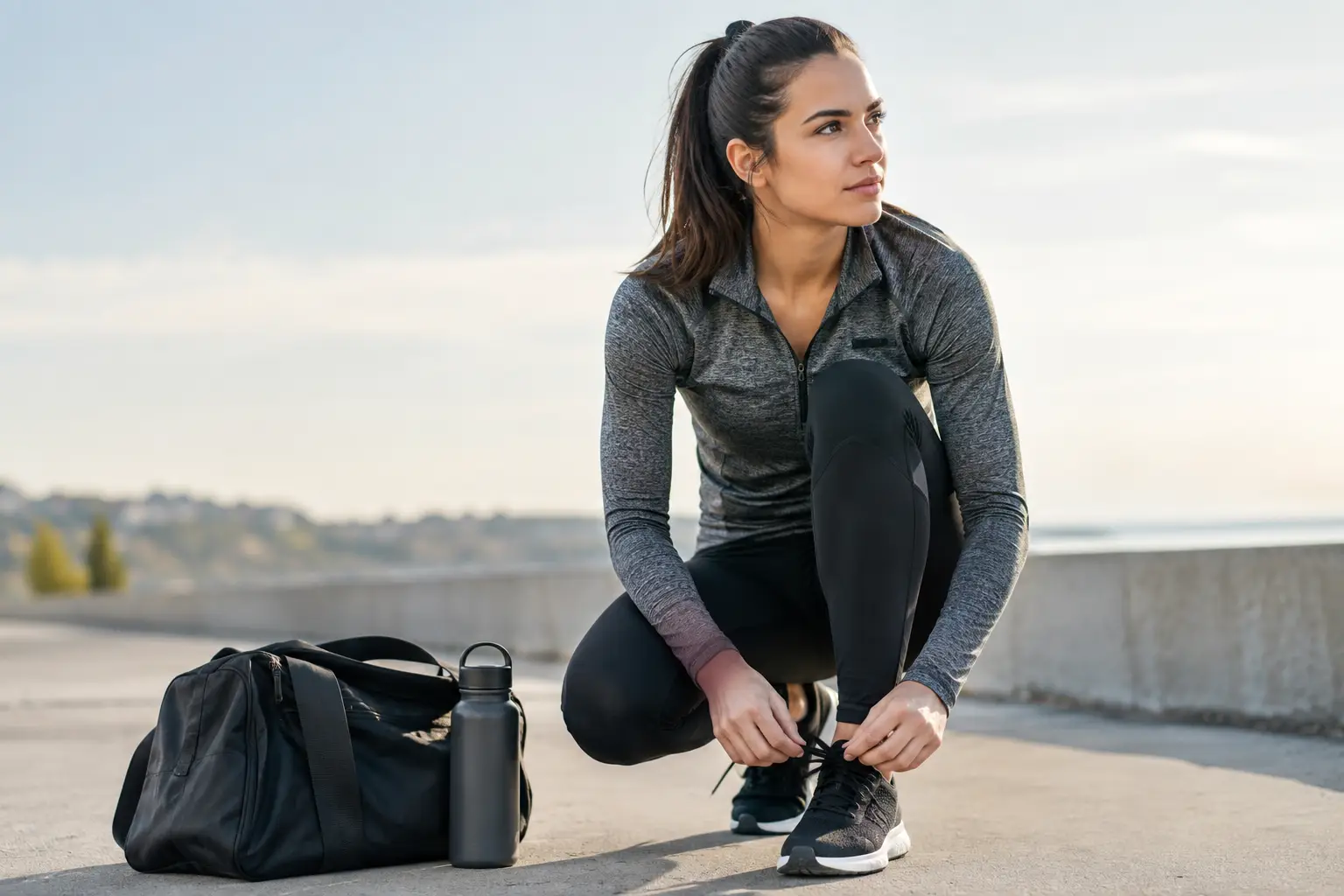
Selecting Training Apparel That Performs
Posted by
The wrong training outfit announces itself quickly: a waistband that rolls midway through a squat, fabric that feels heavy after the warm-up, or a top that needs constant adjusting. Selecting training apparel is not about owning more pieces. It is about choosing fewer, better essentials that let you focus on your pace, your form, and the strength you are building.
Premium performance apparel should feel considered before your session begins and reliable long after it ends. The details matter because they are the difference between clothing that merely looks active and clothing designed to move with you.
Start With How You Actually Move
Your training apparel should match the movement you repeat most, not the workout version of yourself you imagine once a month. A long walk, strength session, Pilates class, studio workout, and active day around the city create different demands on fabric, fit, and support.
For low-impact movement, prioritize soft fabric, a smooth feel against the skin, and a fit that stays comfortable for hours. For strength training, look for secure waistbands, coverage through bending and lunging, and stretch that returns to shape. Higher-intensity sessions often call for lighter materials that manage heat well and stay stable when your pace changes.
There is no single “best” fabric weight or level of compression. The right choice depends on your body, your preferred training, and whether you want a piece that works only for the gym or carries comfortably into the rest of your day. A more supportive fit can feel excellent for a focused workout, while a softer, less restrictive construction may be the better choice for walking or everyday wear.
Build Around Your Core Sessions
Think first about the sessions you do every week. If you train with weights three times a week, choose shorts or leggings that stay in place through deep ranges of motion. If walking is your reset, favor breathable pieces with a refined, non-restrictive feel. If your schedule moves from a morning class to errands, select clean silhouettes that perform without looking overly technical.
This approach keeps purchases purposeful. Rather than collecting apparel for every possible activity, create a rotation of pieces that earn their place through comfort, versatility, and repeat wear.
Fabric Is Where Comfort Begins
A fabric can feel soft in the fitting room and still disappoint after a few washes or a demanding session. Premium training apparel should balance softness with recovery, breathability with coverage, and stretch with durability. Those qualities are engineered together, not added as an afterthought.
Look beyond a generic claim that a piece is “stretchy.” Useful stretch should support natural motion without becoming loose by the end of the day. When fabric recovers well, leggings keep their shape, waistbands remain secure, and tops maintain a polished fit instead of pulling or twisting.
Breathability matters too, but it should not come at the cost of feeling exposed. Very thin fabrics can feel cool at first, yet may lack the coverage and confidence needed for bending, lifting, or simply moving through a busy day. A slightly more substantial material can offer a better balance when you want a smooth, supported feel.
Check the Feel, Then Check the Recovery
When assessing a new piece, notice how the fabric feels against your skin, then consider what will happen after repeated wear. Does it feel smooth without being slippery? Does it stretch easily and return to its original shape? Does it look refined when relaxed, rather than relying on extreme tension to hold its form?
Construction also shapes comfort. Flat, thoughtfully placed seams reduce distraction during repetitive movement. A clean finish around the waistband, straps, and hems helps apparel sit close to the body without digging in. These details can seem subtle on a product page, but they are the elements you feel most over time.
Selecting Training Apparel for Fit and Support
Fit is personal, but it should never be uncertain. The strongest training pieces feel secure without requiring constant adjustment. They follow your shape, allow full movement, and create enough support for the activity without making you feel compressed into a position that is not natural.
Start with the waistband. It should stay level when you sit, hinge, stretch, and walk. If it rolls or slides during simple movement, it is unlikely to improve during training. A wide, well-constructed waistband often distributes pressure more comfortably than a narrow elastic edge, though the best option is the one that feels stable on your body.
For tops, assess the fit through the shoulders, underarms, and torso. You need enough room to reach overhead and rotate freely, but not so much excess fabric that it shifts as you move. A flattering fit is not about restriction. It is about proportion, stability, and the confidence to stop thinking about what you are wearing.
Do Not Size Down for a More “Performance” Feel
A tighter size is not automatically more supportive. When apparel is too small, it can create pressure points, limit range of motion, and cause fabric to pull in places where it should lie smooth. It may also lose shape faster because the material is constantly overstretched.
Use the brand’s size guidance, then be honest about your preferred fit. If you like a firm, held-in sensation for training, choose a style designed for support rather than forcing a softer style to do a different job. This is where thoughtful product design matters: the cut, fabric weight, and waistband structure should provide the function, not an uncomfortable size choice.
Choose Construction That Holds Up
Training apparel is exposed to friction, sweat, frequent washing, and repeated stretching. Durability is not an optional extra. It is part of performance.
Pay attention to whether fabric looks opaque when stretched and whether seams appear clean and reinforced in high-motion areas. Consider the finish of the waistband and hems as well. Pieces that curl, twist, or lose their structure early become distractions, no matter how good they looked on day one.
Care is part of the equation. Even premium fabrics benefit from a little attention. Wash performance apparel in cool water, avoid aggressive heat, and let pieces dry gently when possible. This helps preserve elasticity, softness, and color. If you train often, owning a small rotation also gives each piece time to recover between wears and washes.
SHe.X approaches these essentials with a simple standard: premium engineered comfort should feel as strong in your tenth wear as it did in your first. That is the value of choosing quality over disposable basics.
Let Design Work Beyond the Workout
Performance clothing does not need loud graphics or complicated details to prove its purpose. In fact, understated design often creates more value because it gives you more ways to wear a piece. Clean colors, minimal finishes, and considered proportions can move easily from training to walking, travel, or a relaxed afternoon.
This does not mean every item must do everything. A highly supportive piece may be best reserved for more demanding sessions, while an ultra-soft layer may become your everyday favorite. The point is to select with intention. Each item should offer a clear reason to be in your rotation, whether that is support, softness, coverage, or easy versatility.
A coordinated set can also simplify your routine. When the fit and fabric feel consistently good, getting dressed for movement becomes one less decision. You show up ready, comfortable, and composed.
A Better Standard for Your Next Purchase
Before choosing a new top, short, legging, or layer, ask one practical question: will this make movement feel easier? If the answer is yes because the fabric stays soft, the fit stays put, and the construction supports your routine, it is worth considering. If you are already anticipating adjustments, bunching, or a short lifespan, leave it behind.
Choose apparel that respects the work you put into moving your body. The right piece will not demand your attention. It will give you the comfort and confidence to put that attention where it belongs.

Recent articles
-
A Guide to Sports Bra Support That Moves With You
Our guide to sports bra support explains fit, impact levels, and construction, so you can choose lasting comfort, confident movement, and strength daily.
-

Guide to Activewear Sizing That Actually Fits
A guide to activewear sizing for finding confident support, flattering coverage, and easy movement through workouts, walks, and daily life every time.

Leave a Reply